12 Small Living Room Ideas That Make Your Space Feel Bigger and More Beautiful
Decorating a small living room can feel like solving a puzzle. You want a comfortable sofa, a beautiful coffee table, enough storage, and maybe even a cozy reading corner. But when you’re working with limited square footage, fitting everything together without making the room feel crowded can be challenging.
The good news? You don’t need a huge living room to create a space that looks beautiful, feels comfortable, and reflects your personal style.
With the right furniture, thoughtful color choices, smart storage solutions, and a few decorating tricks, even the smallest living room can feel surprisingly spacious.
Whether you’re decorating a tiny apartment, a compact family home, or a living room that simply feels smaller than you’d like, there are plenty of ways to make the most of your space.
In this guide, we’re sharing 12 small living room ideas that combine style and functionality. From floating furniture and clever storage to cozy lighting and space-saving layouts, these ideas will help you create a living room you’ll genuinely enjoy spending time in.
Let’s get started!
1. Choose a Light and Neutral Color Palette
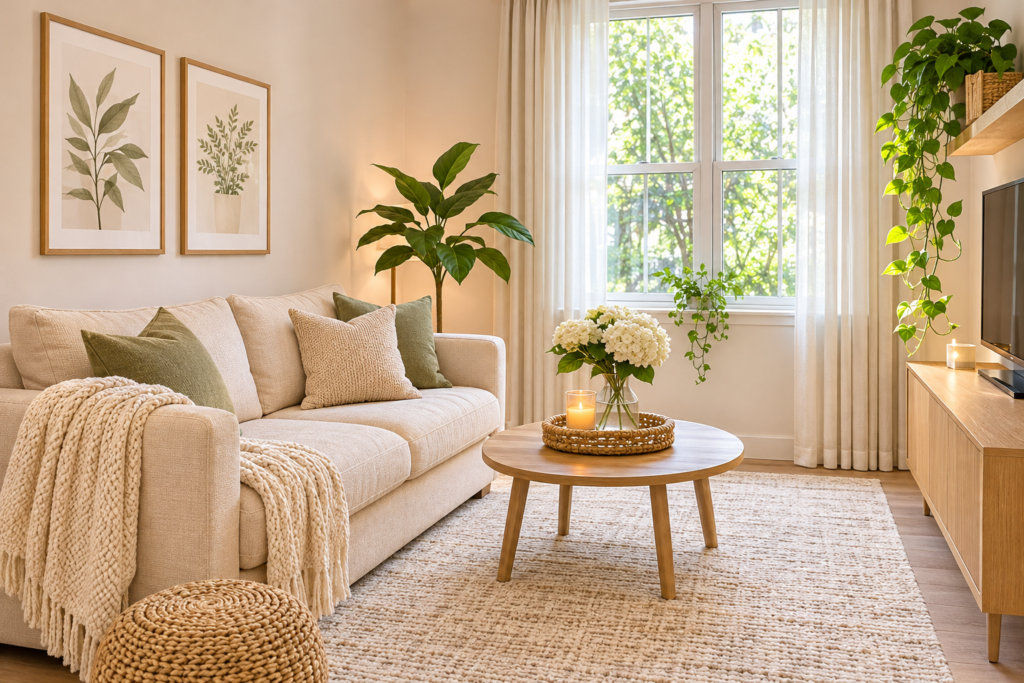
One of the easiest ways to make a small living room feel more open is to use light, neutral colors.
Shades like warm white, cream, beige, and soft gray create a calm background that helps a compact space feel brighter. They also reflect natural light, which can make the room appear more spacious.
You don’t have to paint everything white to achieve this look. A combination of warm neutrals can create a much more inviting atmosphere.
For example, imagine creamy walls paired with a beige sofa, light oak furniture, and a soft ivory rug. Add a few cushions in muted sage green or warm brown, and suddenly the room feels layered without looking busy.
How to bring this look into your living room:
- Choose warm white or light beige for the walls.
- Use neutral-colored sofa upholstery.
- Add cream or ivory curtains.
- Introduce natural wood furniture.
- Use cushions and throws for subtle color.
Styling tip: If you love darker colors, you don’t have to avoid them completely. Use darker shades in small decorative details, such as cushion covers, picture frames, or lampshades.
2. Use a Compact Sofa Instead of Oversized Furniture
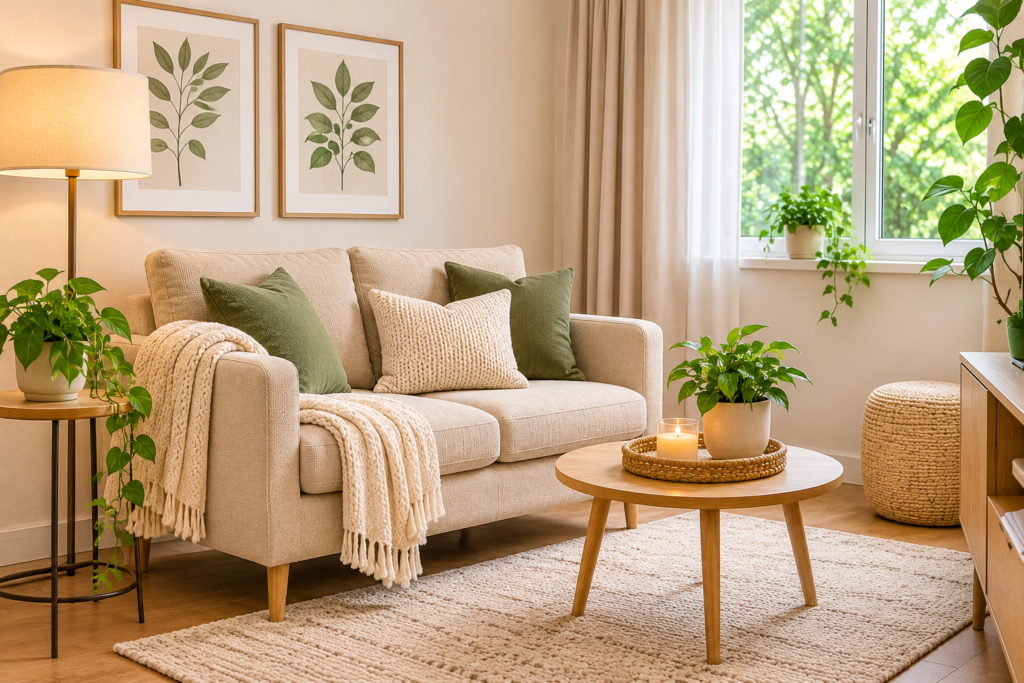
Your sofa is usually the largest piece of furniture in your living room, so choosing the right one can make a huge difference.
An oversized sectional may look beautiful in a large home, but in a small living room, it can block walkways and leave very little room for anything else.
Instead, consider a compact two-seater or apartment-sized sofa.
Look for a design with slim arms, raised legs, and a relatively shallow seat depth. These details can help the furniture feel less visually heavy.
If you regularly entertain guests, you might also consider a small loveseat paired with one or two lightweight accent chairs.
Furniture ideas worth considering:
- Two-seater sofas.
- Compact loveseats.
- Armless sofas.
- Slim-profile sofas with raised legs.
- Small modular seating arrangements.
Styling tip: Before purchasing a sofa, measure your room carefully. Leave enough space for doors to open, people to walk comfortably, and other furniture to be used without difficulty.
3. Add a Large Mirror to Create the Illusion of More Space
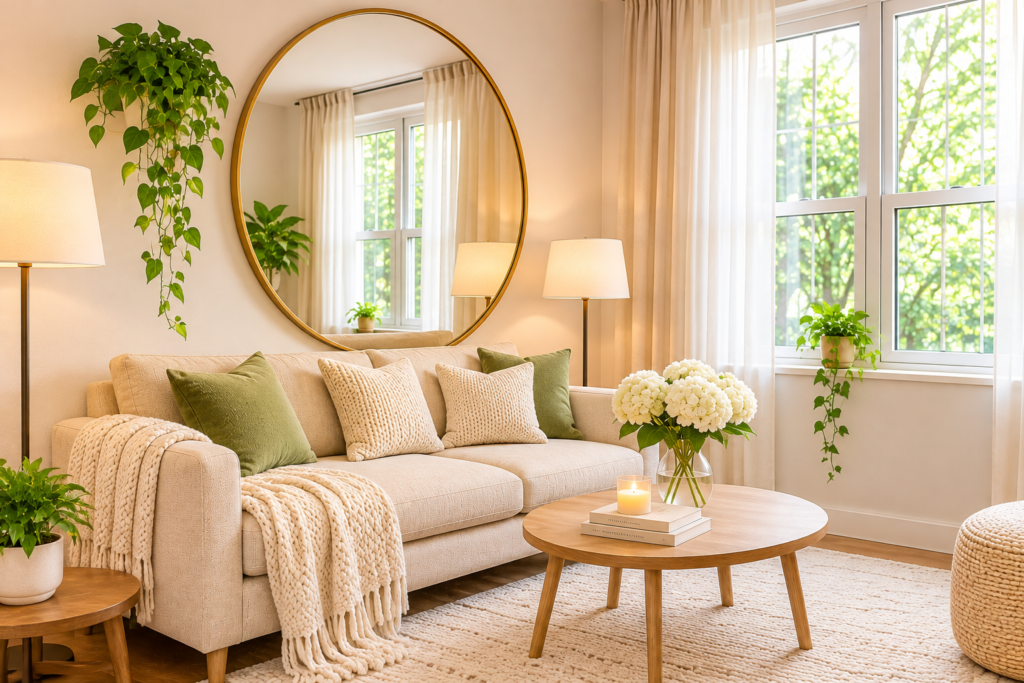
Mirrors are one of the most useful decorating accessories for small rooms.
They reflect light and create visual depth, making a compact living room feel brighter and more open.
A large mirror placed opposite or near a window can reflect natural daylight throughout the room. It can also make a narrow wall feel less enclosed.
You don’t need an expensive designer mirror, either. Affordable full-length mirrors, round mirrors, and simple framed designs can work beautifully.
Some mirror styles to try:
- Large rectangular mirrors.
- Round mirrors above a console table.
- Arched mirrors leaning against a wall.
- Minimal frameless mirrors.
- Decorative mirrors with slim wooden frames.
Styling tip: Position your mirror so that it reflects something attractive, such as a window, a plant, or a beautiful part of your living room. This creates a more intentional look.
4. Choose a Coffee Table With Hidden Storage
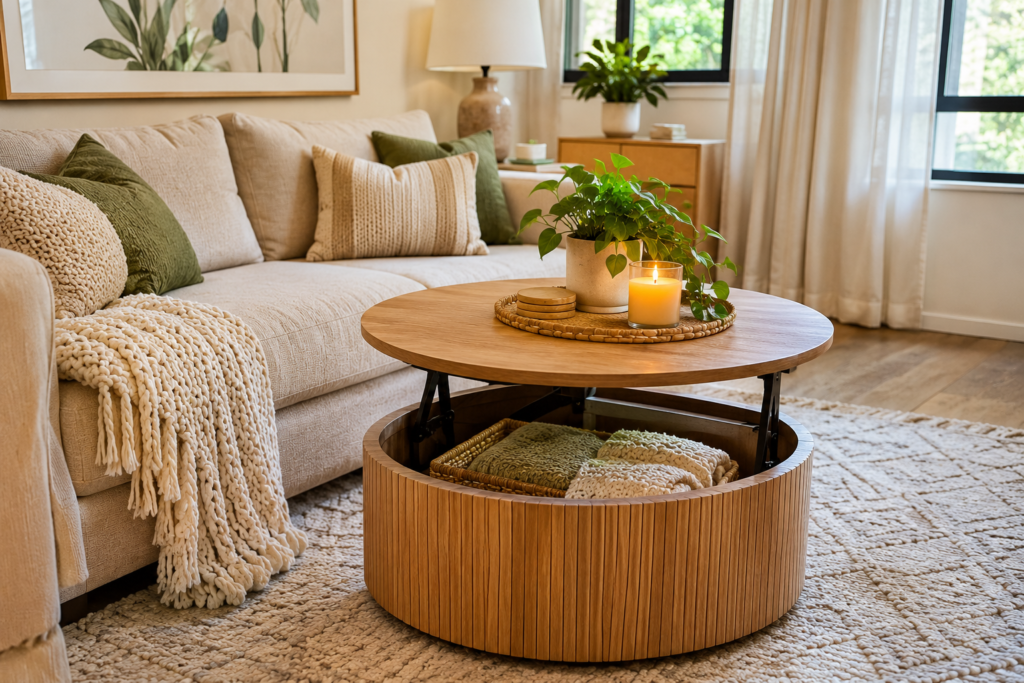
Coffee tables are useful, but they can quickly become another source of clutter.
Remote controls, magazines, chargers, toys, and everyday accessories often end up scattered across the surface.
A coffee table with hidden storage can solve this problem while keeping your living room looking organized.
Consider a lift-top coffee table, a storage ottoman, or a compact table with drawers.
If your living room is particularly small, a round or oval coffee table may also help create easier walking paths because it doesn’t have sharp corners.
Affordable alternatives include:
- Round nesting tables.
- Storage ottomans.
- Small wooden tables with drawers.
- Lift-top coffee tables.
- Compact tables with lower shelves.
Styling tip: Keep the tabletop relatively simple. A small decorative tray, a book, and a vase are often enough to make it look beautiful.
5. Use Floating Shelves to Decorate Your Walls
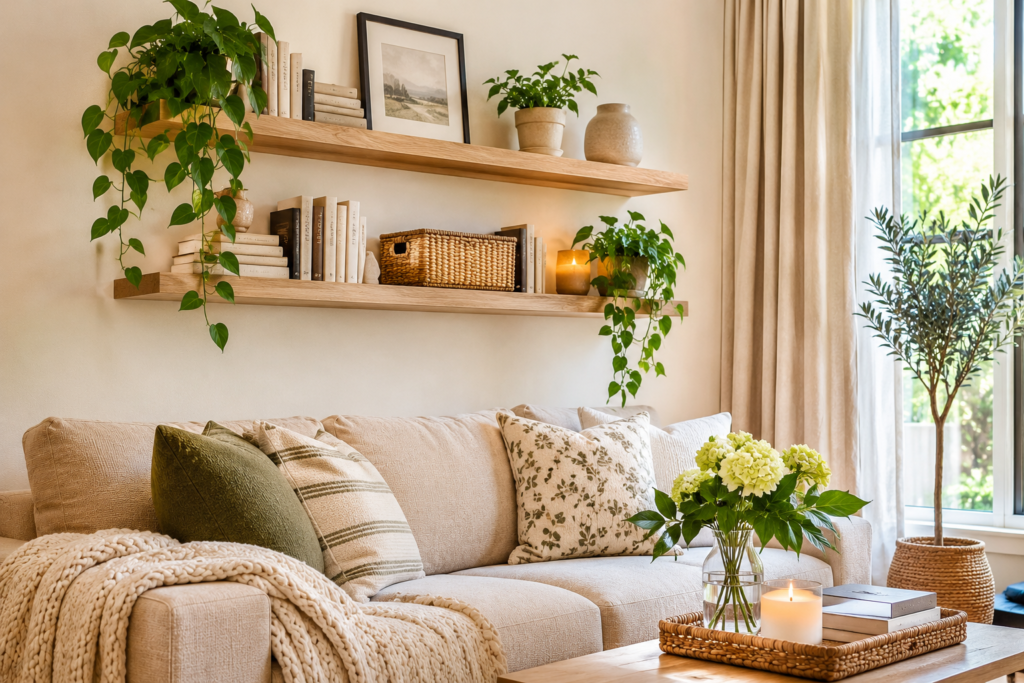
When floor space is limited, your walls become valuable decorating space.
Floating shelves are a practical way to display decorative objects without adding bulky furniture.
You can install them above a sofa, beside a television, or in an empty corner of the living room.
Use them to display small plants, framed photographs, books, candles, and a few favorite accessories.
The key is to avoid filling every shelf with decorative objects. Too many accessories can make even a beautifully organized room feel crowded.
Ideas for styling floating shelves:
- Combine books with small decorative objects.
- Add a trailing plant for natural texture.
- Display a few framed prints.
- Use matching baskets for small items.
- Mix wooden shelves with neutral decor.
Styling tip: Arrange objects at different heights to create visual interest. Leave some empty space between decorative pieces so the shelves don’t look overcrowded.
6. Hang Curtains Higher to Make the Ceiling Look Taller
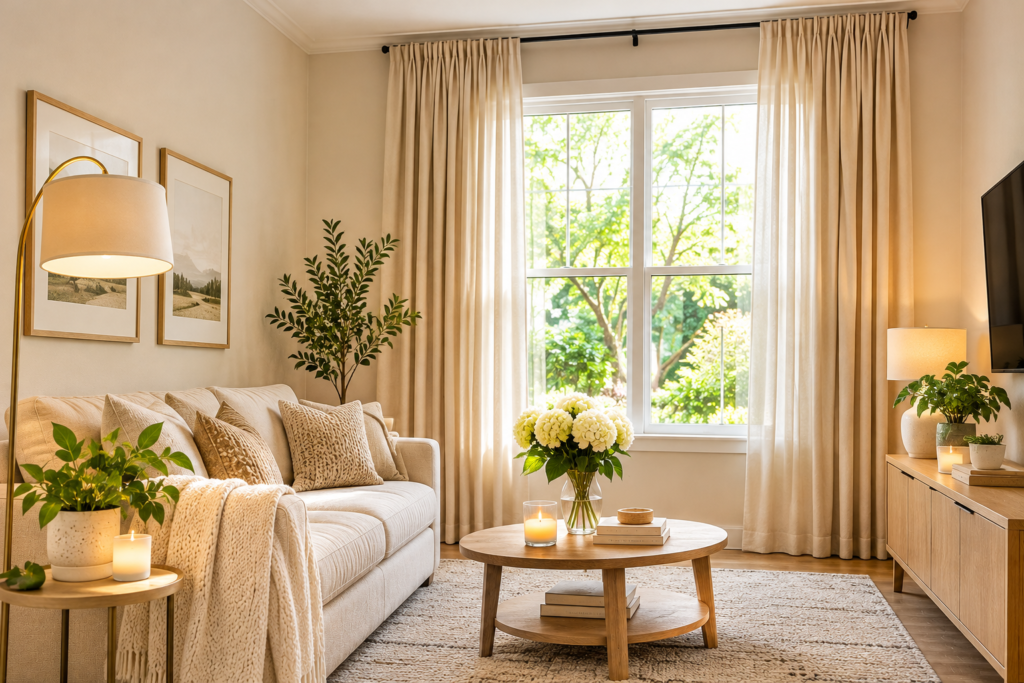
Here’s a simple decorating trick that can make a small living room feel more spacious without changing the actual size of the room.
Instead of installing your curtain rod directly above the window frame, position it closer to the ceiling.
Hang long curtains that reach the floor. This draws the eye upward and creates the impression of taller walls.
Lightweight fabrics such as linen-look cotton or sheer curtains can also help natural light move through the room.
For a cohesive appearance, choose curtain colors that are close to your wall color.
Curtain ideas for small living rooms:
- Floor-length ivory curtains.
- Soft beige linen-look curtains.
- Sheer white curtains.
- Light gray curtains.
- Simple neutral curtains with minimal patterns.
Styling tip: Avoid heavy, overly decorative curtain designs if your room already feels dark or crowded. Simple fabrics often look more elegant in compact spaces.
7. Create a Cozy Corner With a Small Accent Chair
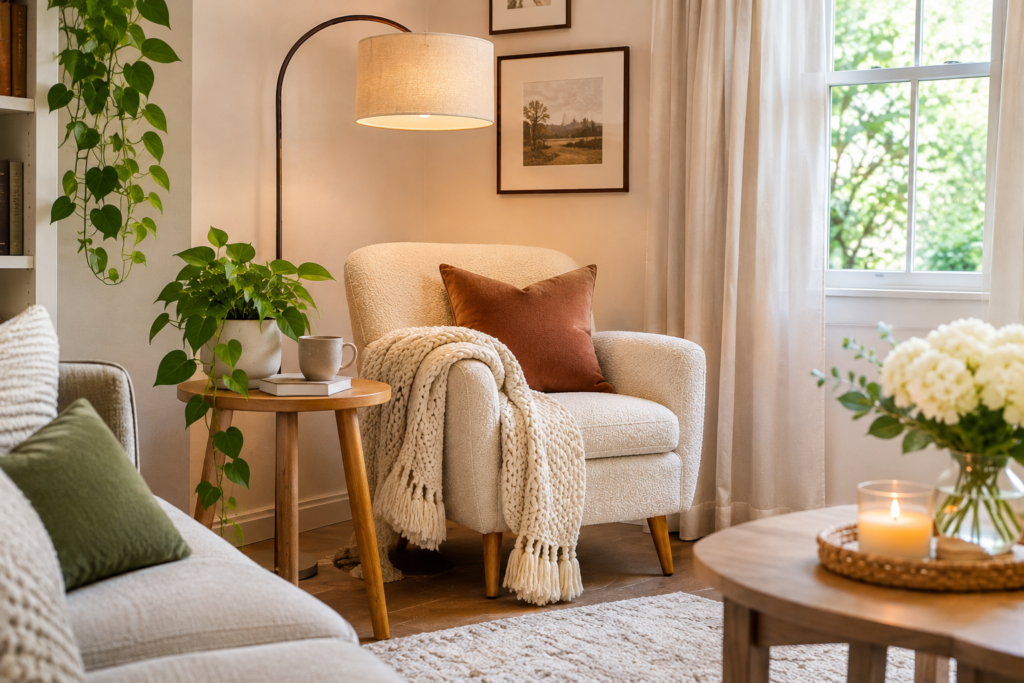
Even a small living room can have a comfortable reading or relaxation corner.
You don’t need a large armchair or an entire seating arrangement. A compact accent chair can provide an additional place to sit without taking over the room.
Look for chairs with slim frames, narrow arms, and raised legs.
Place your chair near a window if possible. Natural light makes the corner feel more inviting, especially when paired with a small side table and a floor lamp.
You can also add a soft throw blanket and one decorative cushion to make the space feel complete.
What works well in a small corner?
- A compact accent chair.
- A small round side table.
- A slim floor lamp.
- A lightweight throw.
- A small indoor plant.
Styling tip: If there isn’t enough room for a separate accent chair, consider a small pouf or an upholstered stool that can be moved around when needed.
8. Make the Most of Vertical Storage
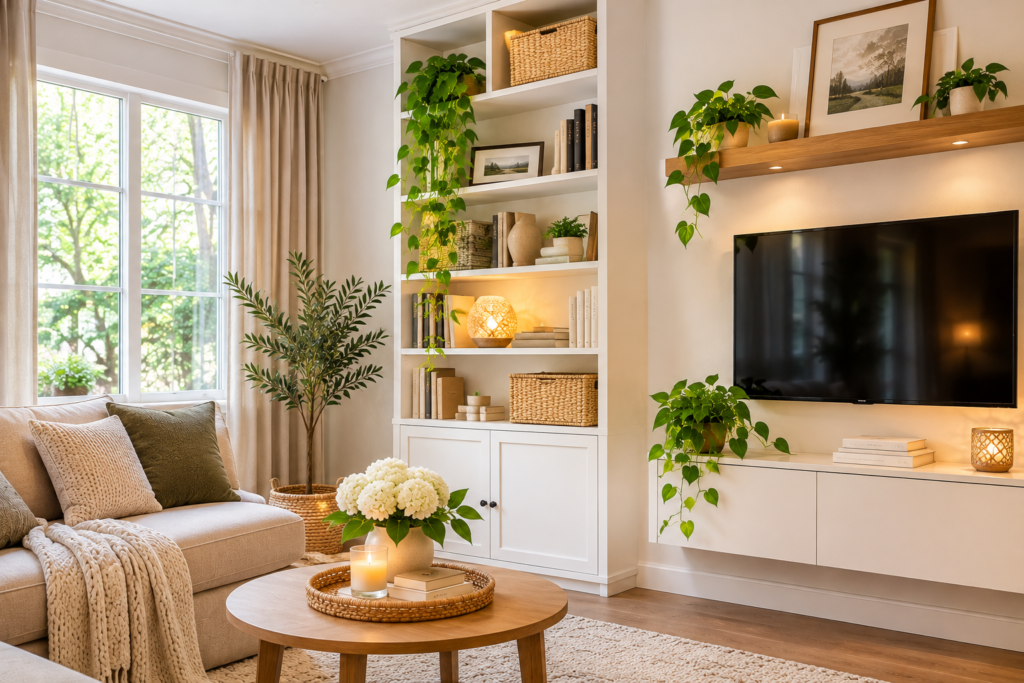
A small living room often has more storage potential than you realize.
Instead of filling the room with cabinets and storage units, consider using the vertical space on your walls.
Tall, narrow shelving units can provide storage without occupying as much floor space as wide cabinets.
You can also use wall-mounted cabinets, decorative hooks, and slim bookcases to organize everyday belongings.
This is particularly helpful if your living room also functions as a workspace or family gathering area.
Vertical storage ideas include:
- Tall narrow bookshelves.
- Wall-mounted cabinets.
- Floating TV consoles.
- Decorative wall hooks.
- Slim shelving units.
- Built-in storage around the television.
Styling tip: Use closed storage for items that tend to create visual clutter. Keep open shelves for a few decorative pieces and books.
9. Use a Large Area Rug to Define the Living Room
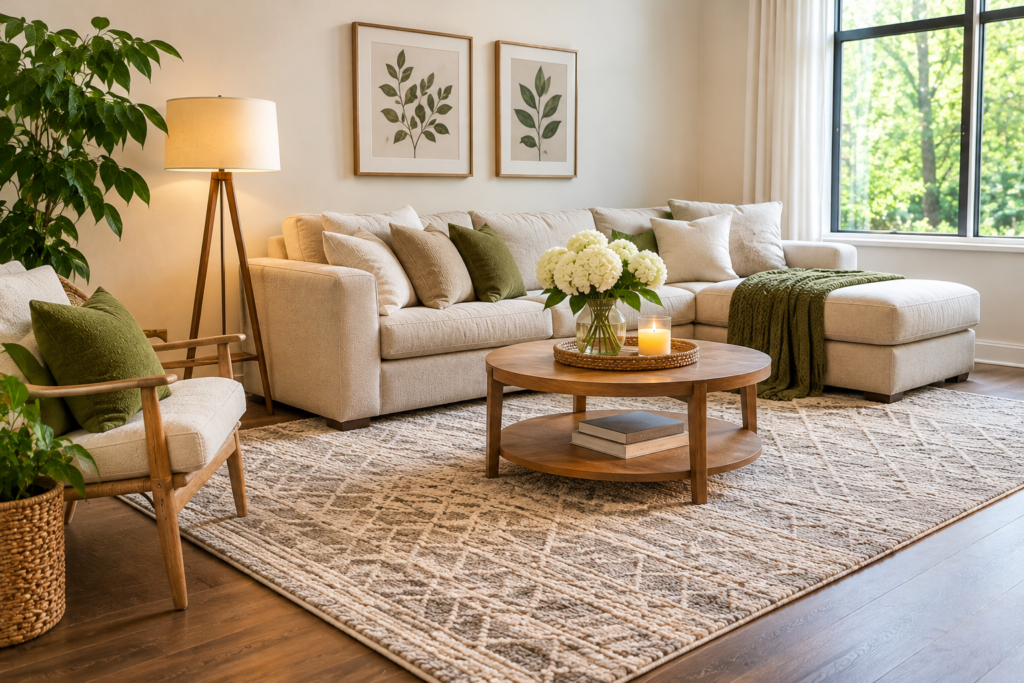
A rug can completely change the appearance of a small living room.
It helps define the seating area, adds texture, and makes the room feel more comfortable.
One common mistake is choosing a rug that’s too small. A tiny rug floating in the middle of the room can make the furniture arrangement feel disconnected.
Instead, choose a rug large enough to sit beneath at least the front legs of your sofa and chairs.
For a small living room, simple patterns and lighter shades can help maintain a balanced appearance.
Rug styles worth considering:
- Neutral woven rugs.
- Cream textured rugs.
- Subtle geometric patterns.
- Natural jute-style rugs.
- Soft vintage-inspired designs.
Styling tip: Make sure the rug is appropriately sized for your seating arrangement. You want it to connect the furniture visually rather than make the room feel fragmented.
10. Add Plants to Bring Life Into Your Living Room
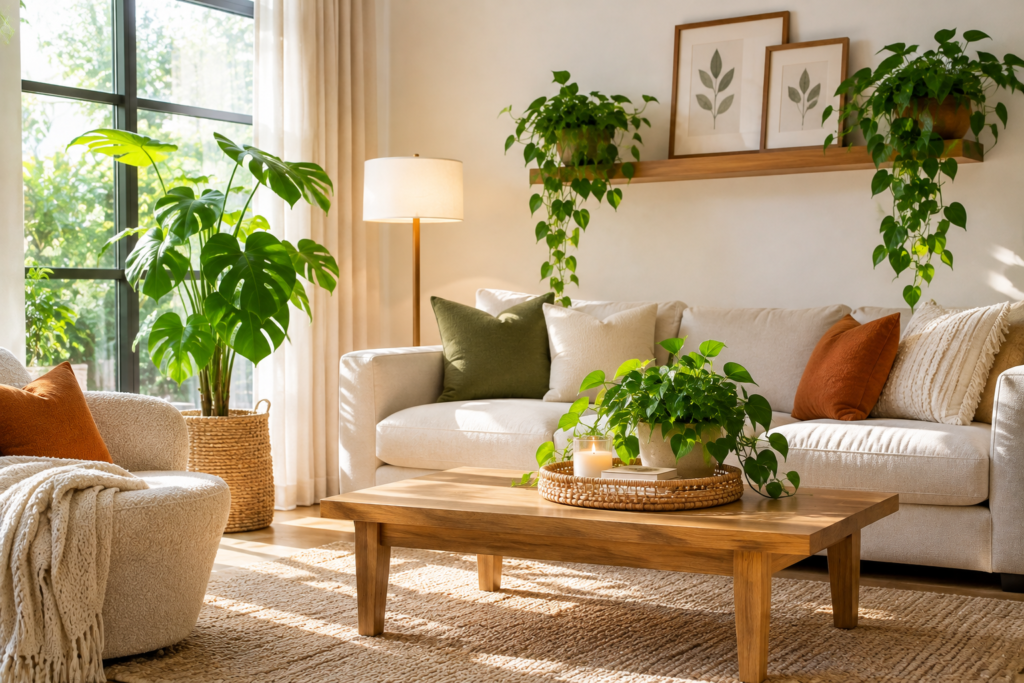
Plants are a beautiful way to make a small living room feel fresh and welcoming.
They introduce natural color, soften hard furniture edges, and add texture without requiring a major decorating budget.
If you don’t have much floor space, choose smaller plants that can sit on shelves, side tables, or windowsills.
You can also use one taller indoor plant in an empty corner to create a natural focal point.
Some easy-to-style options include pothos, snake plants, spider plants, and ZZ plants. Always check that a plant is suitable for your lighting conditions and safe around children and pets.
Ways to decorate with plants:
- Place a small plant on a floating shelf.
- Use a taller plant beside the sofa.
- Add greenery to a coffee table.
- Hang a trailing plant near a window.
- Group two or three small plants together.
Styling tip: Use simple ceramic, woven, or terracotta planters that complement your existing color palette.
11. Use Layered Lighting to Create a Warm Atmosphere
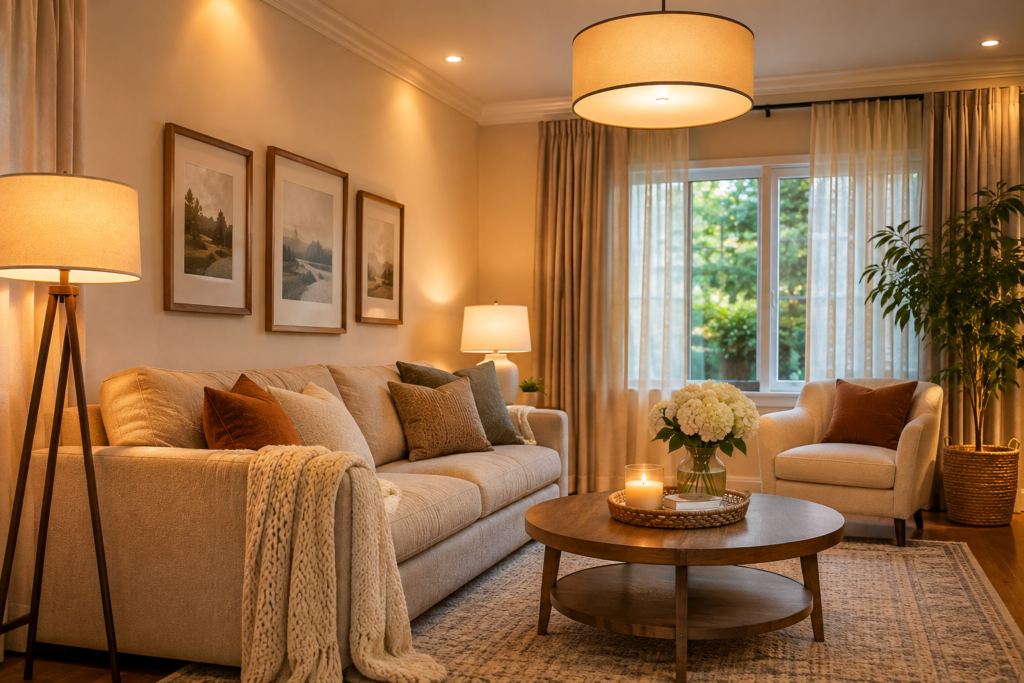
Lighting can make a small living room feel either comfortable and inviting or flat and unwelcoming.
Rather than relying entirely on one overhead ceiling light, combine several smaller light sources.
A table lamp beside the sofa, a floor lamp in an empty corner, and soft ambient lighting can create a much more relaxing atmosphere.
Warm-white bulbs are especially useful if you want your living room to feel cozy in the evening.
You can also use wall-mounted lights to save space on side tables.
Lighting ideas for small living rooms:
- Slim floor lamps.
- Small table lamps.
- Wall-mounted sconces.
- Warm LED accent lighting.
- Decorative pendant lights.
Styling tip: Try using lighting at different heights. This creates depth and helps different parts of the room feel more connected.
12. Arrange Furniture to Keep Walkways Open
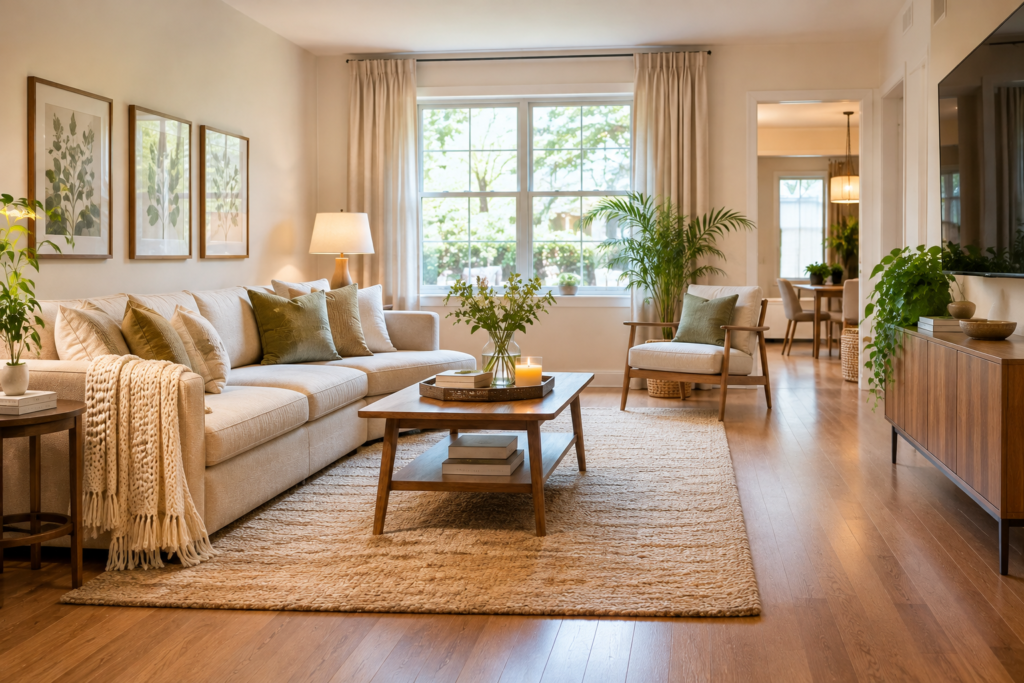
Sometimes, a small living room doesn’t need new furniture at all. It simply needs a better layout.
Furniture placed without considering walking paths can make a room feel much smaller than it really is.
Start by identifying the main entrance and the routes people use to move around the room.
Avoid placing large furniture pieces directly in these paths. Keep enough clearance around doors and commonly used areas.
If possible, position your sofa against a wall to free up the center of the room. Place smaller furniture pieces around the seating area rather than spreading them across every corner.
Layout ideas to try:
- Place the sofa against the longest available wall.
- Use a round coffee table to soften tight walking paths.
- Keep accent chairs lightweight and movable.
- Avoid blocking windows with tall furniture.
- Use a floating TV console to free up floor space.
Styling tip: Before moving heavy furniture, sketch a simple floor plan or use paper cutouts to test different arrangements. It can save time and help you find a layout that works.
Extra Tips to Make a Small Living Room Look Bigger
The twelve ideas above can help you make better use of your living room, but a few small habits can also make a noticeable difference.
Keep Surfaces Clutter-Free
A coffee table covered with magazines, remotes, cups, and decorative accessories can make a small room feel messy.
Use a small tray to group everyday items together and store anything you don’t regularly use.
Choose Furniture With Visible Legs
Furniture raised slightly off the floor allows more of the floor to remain visible. This can make the room feel lighter and less crowded.
Look for sofas, chairs, and cabinets with slim legs rather than heavy bases.
Use Similar Colors Throughout the Room
A consistent color palette helps different elements work together.
You can introduce a few accent shades through cushions, artwork, rugs, and decorative accessories without making the space feel visually overwhelming.
Don’t Push Every Piece of Furniture Against a Wall
Although placing furniture against the walls can sometimes free up space, it isn’t always the best arrangement.
In certain layouts, leaving a small amount of breathing room around furniture can make the room look more thoughtfully designed.
The best arrangement is the one that allows comfortable movement and makes sense for how you use the room.
Frequently Asked Questions About Small Living Rooms
1. What is the best way to decorate a very small living room?
Start with appropriately sized furniture, a simple color palette, and a layout that keeps walkways clear. Add mirrors, vertical storage, layered lighting, and a few decorative accessories to make the room feel comfortable without overcrowding it.
2. What colors make a small living room look bigger?
Warm white, cream, beige, soft gray, and pale sage green are popular choices. These colors can help create a brighter and more open appearance, especially when combined with natural light.
3. What type of sofa is best for a small living room?
A compact two-seater, loveseat, or apartment-sized sofa is usually a good choice. Look for slim arms, raised legs, and dimensions that fit your room without blocking walking paths.
4. How do I arrange furniture in a small living room?
Start by identifying the main walking paths and focal point, such as a television or window. Position larger furniture first, then arrange smaller pieces around it. Avoid blocking entrances and leave enough room to move comfortably.
5. Can a large rug work in a small living room?
Yes! A properly sized rug can visually connect the seating area and make the room feel more cohesive. Choose a size that allows the front legs of your main seating furniture to rest on the rug.
6. How can I add storage without making my living room look crowded?
Use floating shelves, tall narrow bookcases, storage ottomans, nesting tables, and wall-mounted cabinets. Closed storage is particularly useful for hiding everyday clutter.
7. How can I make a small living room look expensive?
Focus on a coordinated color palette, good lighting, attractive textiles, and a few well-chosen accessories. You don’t need expensive furniture to create a polished look. A clean, balanced arrangement often makes the biggest difference.
8. Should I use a sectional sofa in a small living room?
A sectional can work in some small living rooms, particularly when it fits neatly into a corner and replaces multiple separate seating pieces. However, measure carefully and make sure it doesn’t block doors or walkways.
Final Thoughts
A small living room can be just as beautiful, comfortable, and welcoming as a much larger space. The secret is to make thoughtful decorating choices rather than trying to fit too many things into one room.
Start with the basics: choose furniture that fits, keep your color palette consistent, make use of vertical space, and pay attention to lighting.
You can then add personal touches through plants, artwork, cozy textiles, and decorative accessories.
Remember, you don’t need to completely renovate your living room to make it feel special. Sometimes, moving a sofa, adding a mirror, or replacing a bulky coffee table is all it takes to give your space a fresh new look.
Choose the ideas that work best for your home, take your time decorating, and create a living room that feels comfortable for the way you actually live.
